Imagine stepping into a serene tea room in Japan, a world away from the chaos of city life. The allure of a Japan tea ceremony is undeniable, yet the detailed customs can be daunting. Ever felt that?
I get it. Many travelers are captivated by this cultural gem but worry about messing up.
Here’s the thing: you don’t have to. We’ve delved deep into this tradition, piecing together takeaways to guide you. From firsthand experiences and thorough research, we’ve crafted a straightforward path for you.
Why trust this guide? Because it’s built on genuine exploration. We strip away the mystery, offering you a clear, simple way to engage with this timeless art form.
This isn’t just about sipping tea; it’s about embracing a ritual that echoes centuries of history. Ready to feel confident and respectful in the presence of this cultural masterpiece? You will.
This guide promises to make your experience unforgettable.
The Essence of the Tea Ceremony: More Than a Drink
You ever feel like you’re just going through the motions? The Japan tea ceremony is the opposite. It’s called Chado or Sado (茶道), meaning “The Way of Tea.” This isn’t just a social hangout.
It’s a spiritual and aesthetic journey. Think of it as meditation in action. The whole experience is built around four basic principles: Harmony, Respect, Purity, and Tranquility.
Harmony—wa (is) about connecting with others and your surroundings. Respect—kei (means) valuing every person and object, down to the last tea whisk. Purity—sei.
Clears your mind and surroundings of clutter, both physical and mental. Tranquility—jaku (lets) you find peace in the moment. It’s not about escaping life; it’s about embracing it.
Does it remind you of something? It’s like when you attend an art exhibit. You can learn more about this idea by checking out this guide european art movements.
The concept of ‘ichigo ichie’ captures this perfectly. Each ceremony is a unique, once-in-a-lifetime event. You won’t have this exact moment ever again, so treasure it.
So next time you sip tea, ponder this: are you really drinking, or are you missing the art in every cup?
Japan Tea Ceremony: A Step-by-Step Experience
To step into a chashitsu is to leave behind the chaos of modern life. It’s a portal into something serene (almost like entering another world). The room is sparse but intentional.
Every element serves a purpose. The tokonoma, with its simple scroll or flower arrangement, draws you in. It whispers for you to pause and breathe.
Next, comes the sweets. Ah, the wagashi. They’re not just treats.
They’re art. Each one is a tiny masterpiece designed to balance the bitterness of the matcha. I mean, who knew sweets could be so philosophical?
You’re not just eating them. You’re experiencing them.
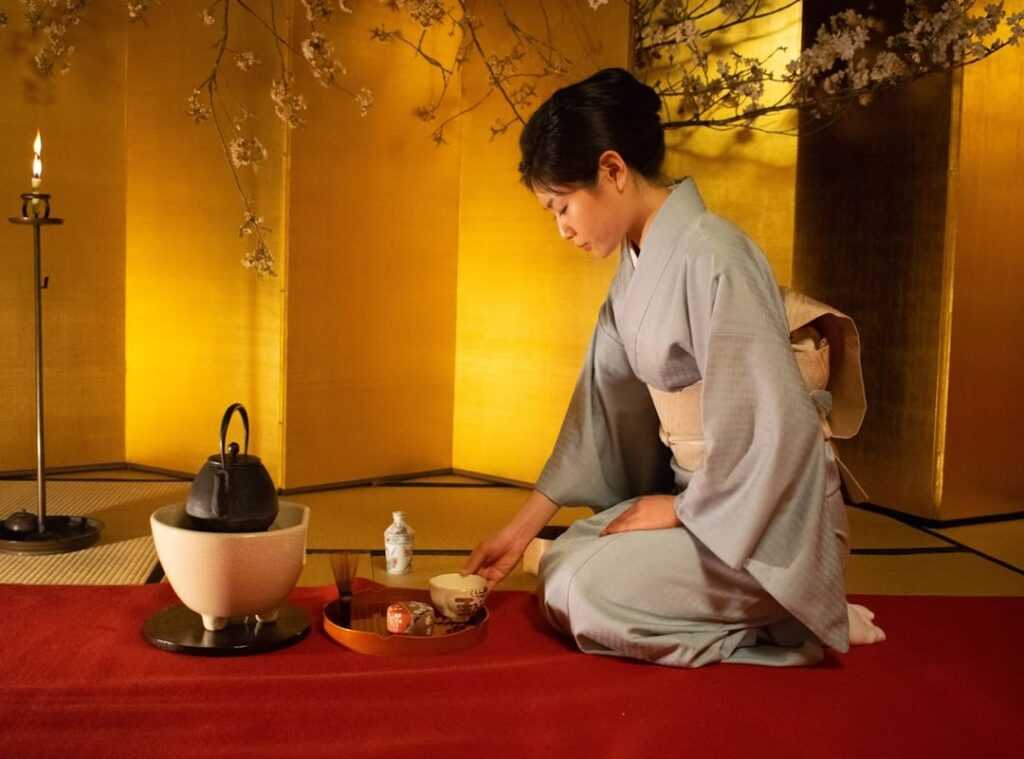
Then, the preparation. Watching the host is like watching a dance (but slower, more meditative). Every movement is deliberate.
The tools, the chawan and chasen, are handled with such care. It’s mesmerizing. It’s not just about making tea.
It’s about creating a moment. You can almost hear the quiet rhythm of tradition in the air.
Receiving the tea is an act of respect. You cradle the bowl with both hands. Rotate it slightly.
Don’t sip from the decorative side. Three sips are all you need, and you finish with a slurp. Why a slurp?
It’s a sign of appreciation. It’s your way of saying, “I get this.”
After the tea, you don’t just toss the bowl back. No, you take a moment. Admire the craftsmanship.
This isn’t just any bowl. It’s a piece of history in your hands. Each one is unique, each a its creator’s skill.
Before returning it, you acknowledge its beauty.
Curious about the deeper traditions and history? Dive into this japan tea ceremony exploration for a richer understanding.
Your Role as a Guest: Tea Ceremony Tips
Attending a Japan tea ceremony is about connections and respect. It’s not a checklist. I think of it as showing appreciation to your host.
What to Wear: Simple, modest clothing is best. Avoid short skirts; you’re gonna be sitting on tatami mats. Flashy jewelry? Skip it. You don’t need to scratch the tea bowls.
Before you step inside, take off your shoes. You might leave big bags outside too. Sometimes you’ll find a stone basin to purify your hands and mouth.
If you see it, use it. It’s part of the ritual.
Inside, move mindfully. Try not to step on the joins of the tatami mats. Keep everything quiet and calm.
The vibe isn’t about you; it’s about the ceremony.
Key ‘Don’ts’:
- Strong perfume or cologne (don’t overshadow the delicate scents).
- Keeping your phone out or loud talking (destroys the quiet).
Hosts usually welcome foreigners. They’re patient, knowing you’re learning. So don’t stress if you slip up.
In a way, it’s similar to when you’re diving South American festivals. You dive in and respect each moment.
Remember, this isn’t a strict manual. It’s just about showing up with respect and an open mind. That’s what makes the experience richer.
Whether you’re at the tea ceremony or exploring a new culture, just be present. That’s the real etiquette.
Finding Your Ceremony: Sip and Savor in Japan
Kyoto is the heart of tea culture. If you’re after the real deal, this is where you should be. Gion and Higashiyama are packed with traditional tea houses.
The vibe here? It’s like stepping into another time. You can almost feel the history in the air.
But don’t count out Tokyo or Kanazawa. They offer something unique too. In Tokyo, tea ceremonies pop up in lush gardens and cultural centers.
Kanazawa, with its old-world charm, presents a more intimate experience. Each city offers its own spin on the Japan tea ceremony.
Now, let’s talk experiences. You have choices. There’s the full, formal ceremony (multi-hour,) deeply traditional.
But maybe time’s not on your side. Shorter demonstrations are designed for tourists. They’re quick, but still capture the essence without overwhelming first-timers.
So, how do you book this magical experience? Easy. Use reputable online platforms like Klook or Viator.
Trust me, they make it simple to compare options. Or, ask your hotel concierge. They’re a treasure trove of local knowledge.
Tourist info centers can also point you in the right direction.
Pro tip: look for small group sizes. They offer a more personalized experience. And check reviews (good) reviews are gold.
Make sure the listing clearly explains what’s included. No surprises, just pure enjoyment.
Are you ready to dive into this? The tea world in Japan is waiting. Get ready to sip, learn, and immerse yourself in this beautiful tradition.
Find Your Moment of Stillness
Experiencing a Japan tea ceremony isn’t just about sipping tea. It’s about finding stillness, pausing to appreciate that one perfect moment. Sure, it might seem intimidating at first.
But once you get the hang of the simple steps and spirit, you’ll feel right at home. You aren’t just another tourist; you’re part of a tradition stretching back centuries. So why not add this to your travel plans?
Dive into the ceremony, embrace the moment, and turn your trip into something unforgettable. Visit beevitius.com to explore more cultural guides and make your next adventure truly unique.
 Idana Burraynos has opinions about travel planning hacks. Informed ones, backed by real experience — but opinions nonetheless, and they doesn't try to disguise them as neutral observation. They thinks a lot of what gets written about Travel Planning Hacks, Horizon Headlines, Global Travel Essentials is either too cautious to be useful or too confident to be credible, and they's work tends to sit deliberately in the space between those two failure modes.
Reading Idana's pieces, you get the sense of someone who has thought about this stuff seriously and arrived at actual conclusions — not just collected a range of perspectives and declined to pick one. That can be uncomfortable when they lands on something you disagree with. It's also why the writing is worth engaging with. Idana isn't interested in telling people what they want to hear. They is interested in telling them what they actually thinks, with enough reasoning behind it that you can push back if you want to. That kind of intellectual honesty is rarer than it should be.
What Idana is best at is the moment when a familiar topic reveals something unexpected — when the conventional wisdom turns out to be slightly off, or when a small shift in framing changes everything. They finds those moments consistently, which is why they's work tends to generate real discussion rather than just passive agreement.
Idana Burraynos has opinions about travel planning hacks. Informed ones, backed by real experience — but opinions nonetheless, and they doesn't try to disguise them as neutral observation. They thinks a lot of what gets written about Travel Planning Hacks, Horizon Headlines, Global Travel Essentials is either too cautious to be useful or too confident to be credible, and they's work tends to sit deliberately in the space between those two failure modes.
Reading Idana's pieces, you get the sense of someone who has thought about this stuff seriously and arrived at actual conclusions — not just collected a range of perspectives and declined to pick one. That can be uncomfortable when they lands on something you disagree with. It's also why the writing is worth engaging with. Idana isn't interested in telling people what they want to hear. They is interested in telling them what they actually thinks, with enough reasoning behind it that you can push back if you want to. That kind of intellectual honesty is rarer than it should be.
What Idana is best at is the moment when a familiar topic reveals something unexpected — when the conventional wisdom turns out to be slightly off, or when a small shift in framing changes everything. They finds those moments consistently, which is why they's work tends to generate real discussion rather than just passive agreement.