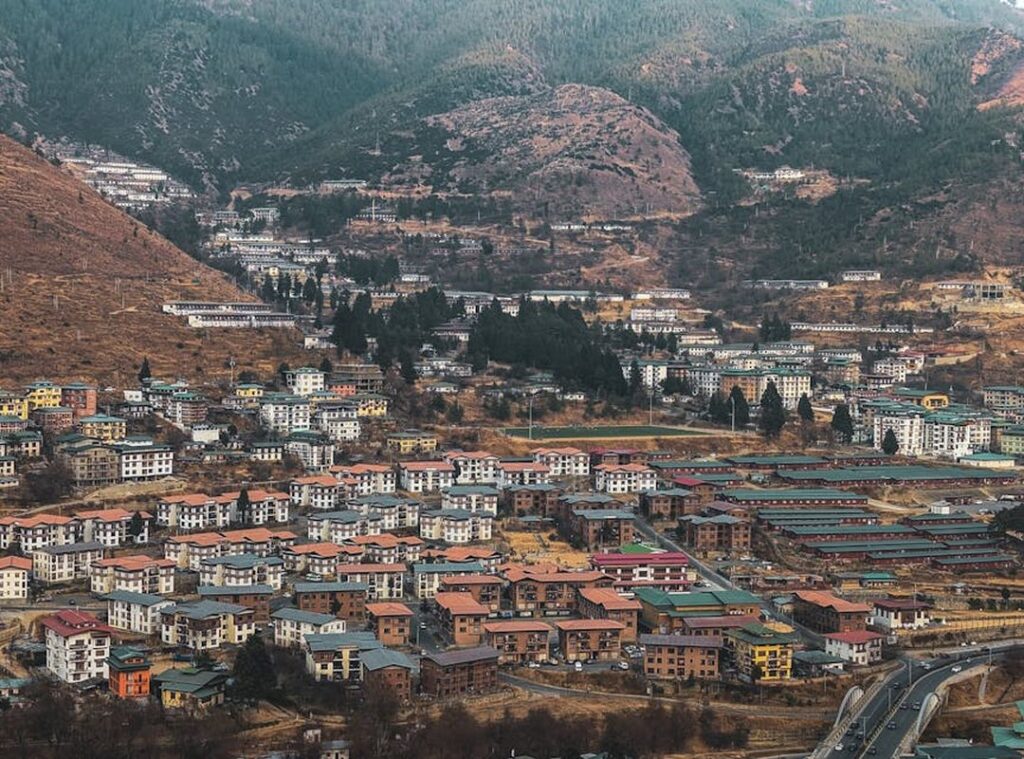
Mist-wreathed mountains stand like silent guardians over Bhutan, a kingdom where happiness trumps commerce. It’s romanticized, sure, but do we really understand its secrets? Outsiders tend to skim the surface, missing the mysteries of Bhutan that lie beneath its serene exterior.
I promise you this: we’re diving deeper. This isn’t your typical guide with banal travel tips. It’s built on rigorous cultural research, aiming to crack open the enigma of Bhutan’s unique spirit.
What’s the real deal behind its happiness? What’s fueling its spiritual life?
As you read on, expect an insider’s journey that peels back layers, exposing truths that make Bhutan one of the most captivating spots on Earth. Ready to uncover what’s been hidden? Trust me, this guide will take you there.
The First Enigma: Policy or Prayer?
Gross National Happiness (GNH). Just saying it feels like a breath of fresh air, doesn’t it? This concept baffles economists, yet inspires travelers.
It’s as if Bhutan whispered its own set of spiritual commandments into the ears of its leaders. Imagine a world where happiness isn’t just a fleeting emotion but a measurable, national goal.
Now, let’s break down the four pillars of GNH. Sustainable development, environmental protection, cultural preservation, and good governance. Sounds like a wish list for Utopia.
But here’s the twist: these aren’t just government policies. They’re spiritual commandments. Bhutan treats them like sacred vows.
And honestly, shouldn’t we all?
Picture this: a constitutional mandate that 60% of Bhutan must remain forested. That’s not just a policy; it’s a living, breathing reality. You walk through lush landscapes, inhale the clean air, and feel nature’s tangible embrace.
This isn’t just a statistic on paper. It’s an experience. It’s what the mysteries of Bhutan are all about.
Think about it. What if a nation’s wealth was truly measured by the well-being of its people and environment? Wouldn’t that change everything?
We often hear about GDP and stock markets. But happiness? That’s a different game altogether.
It’s like comparing apples to oranges, or maybe apples to happiness.
As you ponder these thoughts, consider other destinations that might surprise you too. Check out unveiling brazil lesser known landscapes. It’s all about discovering the unseen, just like Bhutan’s GNH.
The Tiger’s Nest: A Monastery That Defies Gravity and Logic
There’s this moment, about halfway through the hike to Paro Taktsang, where you realize something strange. The air gets thin, and your breathing? It becomes your constant companion.
Every step is a negotiation (am I there yet?). But the sound of prayer flags snapping in the wind keeps you going. It’s like they whisper secrets, urging you upward.
Approaching the monastery feels like entering another world. The scent of burning juniper incense wraps around you like a warm blanket. This aroma isn’t just pleasant.
It’s profoundly spiritual. It speaks to centuries of faith, echoing through the Himalayan cliffs.
Instead, it’s a mysteries of Bhutan that breathes life into their spirituality. You can feel the energy, almost crackling in the air.
The legend of Guru Rinpoche flying to the cliffside on a tigress is more than a story. It’s the soul of this place. Folks around here don’t view it as some fairy tale.
For Bhutanese people, this pilgrimage is a rite of passage. It’s not just a hike. It’s a physical and spiritual test that reconnects them to their history, their beliefs.
Each step is like turning a page in an ancient book, full of wisdom and reverence.
What hits you most, though, is the emotional ride. It starts with struggle. Your legs scream.
Yet, as you climb higher, awe takes over. The view, the silence (it’s) overwhelming. And then, peace.
As you reach the top, a deep calm settles in.
Is it magic? Maybe. It’s definitely a journey you can’t forget.
But why would you want to?
The Divine Madman: An Unconventional Path to Enlightenment
Drukpa Kunley, the “Divine Madman” of the 15th century, is a figure who truly defies expectations. Imagine a saint who uses shock and humor to shake people out of their everyday thinking. That was Kunley.
Now, let’s talk about those phallic symbols painted on Bhutanese homes. At first glance, they might seem like nothing more than crude jokes. But dig deeper, and you’ll find they are symbols that ward off evil spirits, gossip, and ego.
You might find it odd, but his methods were as effective as they were controversial. He wasn’t just a saint; he was a game-changing in spiritual garb.
It’s not about fertility; it’s about protection and humility. It’s a tradition that connects to the Buddhist concept of “crazy wisdom” (yeshe cholwa). Kunley’s antics were designed to shatter illusions, not just entertain.
Ever been to Chimi Lhakhang? It’s the temple dedicated to him, and the atmosphere is electric. There’s a mix of deep reverence and playful energy that captures Kunley’s legacy perfectly.
People come from all over to experience this unique blend. It’s like stepping into a world where the mysteries of Bhutan unfold right before your eyes.
This might remind you of the hidden villages Scottish Highlands. Both are places where ancient traditions and unexpected practices thrive. They invite you to question what you think you know.
After all, isn’t that what true enlightenment is about? Shaking things up and seeing the world anew.
Whispers in the High Passes: The Enduring Legend of the Migoi
When I think of the mysteries of Bhutan, the Migoi instantly comes to mind. It’s not just another cryptid tale. Unlike the Western “Abominable Snowman,” the Migoi is woven into the fabric of Bhutanese culture.
It’s not just a creature lurking in the shadows; it’s a symbol of respect for the environment. The Migoi represents something sacred and untamed.
In Bhutan, the Migoi isn’t a sideshow for tourists. It’s serious business. The Sakteng Wildlife Sanctuary was established partly to protect its habitat.
This isn’t just folklore gone wild; it’s a how deeply this belief runs. Imagine a place so revered that it’s protected by law. That’s the power of the Migoi legend.
I heard a tale once (from a local, of course) about a shepherd who wandered too close to the deep forests. He returned, whispering about a towering figure, silent and watchful. His story wasn’t a boast or a frightful warning.
It was a reminder of the mysteries that lie beyond our understanding.
And that’s the point, isn’t it? Some mysteries don’t need solving. The Migoi teaches us humility.
It reminds us that we don’t need to have all the answers. Sometimes, just knowing that the wilderness holds secrets is enough. It keeps the world a little larger, a little more magical.
So, should we keep searching for proof? Maybe not. Because the Migoi, in its enigma, symbolizes the wild heart of Bhutan.
And some things are better left as whispers in the high passes.
Open up the Secrets
Feel like the mysteries of Bhutan have opened up to you? They’re not just puzzles. They’re takeaways into a richer way of seeing the world.
We all crave authentic wonder, but let’s be honest, it’s rare in our tech-heavy lives. Bhutan shows us the magic of prioritizing spirit over stuff. It’s like stepping into a dream where you can touch the stars.
So what’s next? Keep that wonder alive. Dive into your world’s enigmas.
Let Bhutan be the start. Explore. Challenge.
Be inspired. Want more like this? Explore beevitius.com and keep the magic going.
 Charleswens Loman writes the kind of hidden gems content that people actually send to each other. Not because it's flashy or controversial, but because it's the sort of thing where you read it and immediately think of three people who need to see it. Charleswens has a talent for identifying the questions that a lot of people have but haven't quite figured out how to articulate yet — and then answering them properly.
They covers a lot of ground: Hidden Gems, Horizon Headlines, Travel Planning Hacks, and plenty of adjacent territory that doesn't always get treated with the same seriousness. The consistency across all of it is a certain kind of respect for the reader. Charleswens doesn't assume people are stupid, and they doesn't assume they know everything either. They writes for someone who is genuinely trying to figure something out — because that's usually who's actually reading. That assumption shapes everything from how they structures an explanation to how much background they includes before getting to the point.
Beyond the practical stuff, there's something in Charleswens's writing that reflects a real investment in the subject — not performed enthusiasm, but the kind of sustained interest that produces insight over time. They has been paying attention to hidden gems long enough that they notices things a more casual observer would miss. That depth shows up in the work in ways that are hard to fake.
Charleswens Loman writes the kind of hidden gems content that people actually send to each other. Not because it's flashy or controversial, but because it's the sort of thing where you read it and immediately think of three people who need to see it. Charleswens has a talent for identifying the questions that a lot of people have but haven't quite figured out how to articulate yet — and then answering them properly.
They covers a lot of ground: Hidden Gems, Horizon Headlines, Travel Planning Hacks, and plenty of adjacent territory that doesn't always get treated with the same seriousness. The consistency across all of it is a certain kind of respect for the reader. Charleswens doesn't assume people are stupid, and they doesn't assume they know everything either. They writes for someone who is genuinely trying to figure something out — because that's usually who's actually reading. That assumption shapes everything from how they structures an explanation to how much background they includes before getting to the point.
Beyond the practical stuff, there's something in Charleswens's writing that reflects a real investment in the subject — not performed enthusiasm, but the kind of sustained interest that produces insight over time. They has been paying attention to hidden gems long enough that they notices things a more casual observer would miss. That depth shows up in the work in ways that are hard to fake.