
Planning an international trip is exciting—but navigating unfamiliar customs, packing efficiently, and uncovering authentic local experiences can quickly become overwhelming. If you’re searching for reliable, practical travel insights that go beyond surface-level tips, you’re in the right place. This guide is designed to help you explore the world with confidence, offering essential travel planning hacks, destination deep dives, and carefully curated global travel essentials to make every journey smoother.
Inside, you’ll find actionable advice tailored to modern travelers—whether you’re preparing for your first overseas adventure or refining your seasoned itinerary. From must-know packing strategies to immersive cultural insights, including a detailed cultural etiquette guide, this article equips you with the knowledge to travel respectfully and responsibly.
Our insights are built on extensive research, real-world travel analysis, and up-to-date global trends—so you can make informed decisions, avoid common pitfalls, and focus on what truly matters: experiencing the world with clarity and confidence.
Beyond the Guidebook: Your Key to Respectful Global Travel
Generic tips tell you what to do. A true cultural etiquette guide explains why it matters. That difference changes everything. Cultural norms—shared, often unspoken social rules—shape how respect is shown worldwide.
For example, making direct eye contact: In the U.S., it signals confidence. In Japan, prolonged eye contact can feel confrontational. Same action, different meaning.
So consider A vs. B. A: Memorize gestures and hope for the best. B: Understand context, adapt naturally, and build real connection. The second approach reduces anxiety and invites authenticity (and fewer awkward apologies).
Ultimately, awareness beats assumption—every single time.
The First Impression: Mastering Greetings and Introductions
First impressions form fast—within seven seconds, according to research from Princeton psychologists Janine Willis and Alexander Todorov (2006). In other words, before you finish saying hello, judgments are already underway. That’s why acknowledging hierarchy (rank or status within a social structure) and personal space (the physical distance considered comfortable in a culture) is universal—even if the gestures differ.
Consider handshakes, bows, and kisses through a cultural etiquette guide lens:
- The Firm Handshake (North America, Germany): A steady grip and direct eye contact signal confidence. A 2015 University of Alabama study linked firm handshakes with perceptions of competence.
- The Gentle Handshake (Middle East, parts of Asia): Softer pressure reflects respect and restraint, not weakness (yes, lighter can mean stronger culturally).
- The Bow (Japan, Korea): Depth and duration indicate seniority; a deeper bow shows deference. Business case studies from Japan highlight bowing accuracy as essential to trust-building.
- Cheek Kisses (Europe, Latin America): The number varies—one in parts of Spain, two in France—so observe before leaning in.
Some argue that globalization has erased these nuances. Yet cross-cultural management research from Harvard Business Review consistently shows etiquette missteps harm deals.
When using titles and names, start formal—“Mr. Tanaka” rather than a first name. You can always relax later, but can you undo overfamiliarity?
Breaking Bread: Navigating the Nuances of Dining Etiquette
Dining isn’t just about food. It’s a COMMUNAL ritual—meaning a shared social experience—and often a symbolic one. Around the world, table manners signal respect for your host’s traditions and values. If you’ve ever worried about “doing it wrong,” you’re not alone (we’ve all stared at a table full of forks in mild panic).
Utensil Protocol: More Than Just Forks and Knives
Chopstick Etiquette (East Asia). Never stick chopsticks upright in rice. This resembles incense offered at funerals and is considered taboo (taboo = socially or culturally forbidden). Pointing with chopsticks is also impolite; they’re for eating, not gesturing.
Eating with Hands (India, Middle East, parts of Africa). The “right hand only” rule reflects cultural ideas about cleanliness and respect. The left hand is traditionally reserved for personal hygiene. Clarification: this isn’t about dominance; it’s about SYMBOLISM tied to purity customs.
Continental vs. American Style (Western dining). In Continental style, the fork stays in the left hand and knife in the right throughout. In American style, you cut with both, then switch the fork to your right to eat. Subtle? Yes. Noticed? Also yes.
Punctuality and Paying the Bill
“Fashionably late” might fly in Paris but not in Tokyo, where punctuality signals reliability. Hosting customs vary too. In some cultures, the inviter insists on paying; elsewhere, splitting the bill is standard. When unsure, discreetly ask or observe.
For deeper context before your trip, read how to experience local festivals respectfully as a traveler.
Think of this as your starter cultural etiquette guide: simple awareness prevents awkward moments—and builds genuine connection.
Gifts and Gestures: The Silent Language of Respect
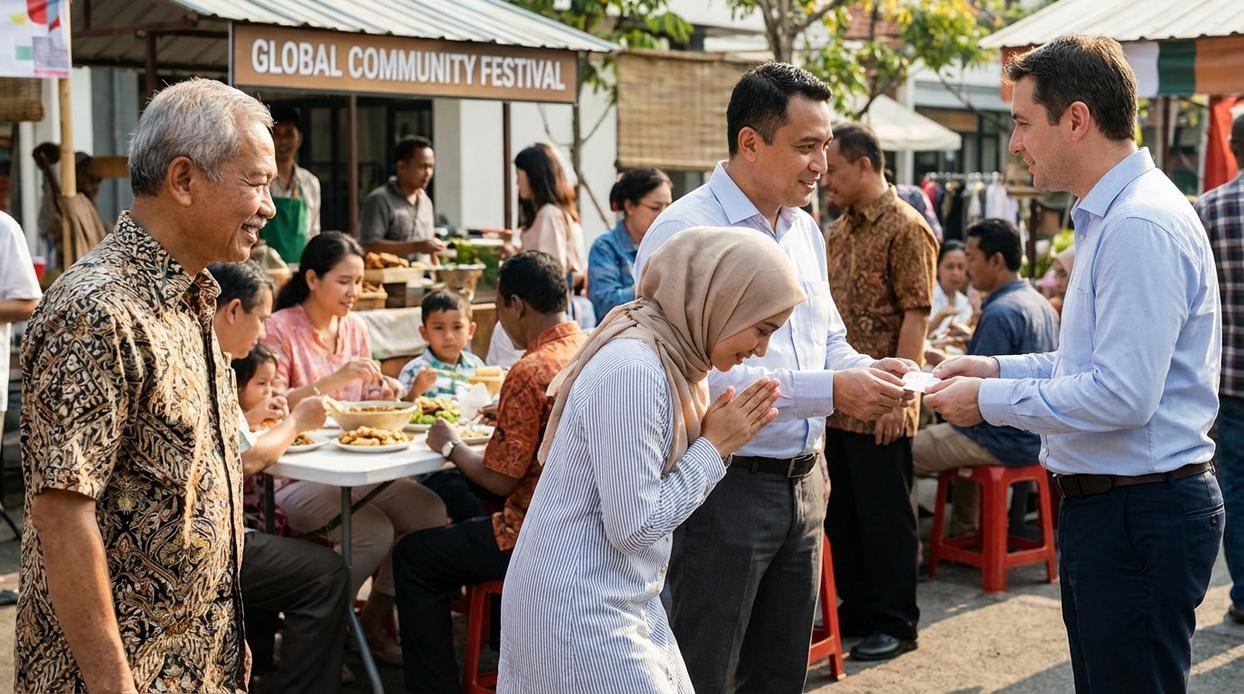
Gifting is more than politeness; it’s a social contract built on what anthropologists call the principle of reciprocity—the idea that kindness should be returned in kind (Mauss, The Gift, 1925). In my experience, ignoring this unspoken rule is like skipping a handshake at a job interview—it feels off, even if no one says it out loud.
Giving and Receiving Without the Awkwardness
In China and Japan, presentation matters as much as the present. Red symbolizes luck in China, while white can signal mourning (China Highlights, 2023). Japan treats wrapping as an art form; neatness reflects respect. I always say: if it looks rushed, it feels rushed. Thoughtful wrapping signals thoughtful intent. Pro tip: avoid sets of four in East Asia—the number sounds like “death” in Mandarin and Japanese.
In many Arab and Asian cultures, a gift may be politely refused once or twice. This ritual refusal shows humility, not rejection. Accepting too quickly can appear greedy (Kwintessential, 2022). Yes, it can feel like a verbal tennis match, but play along.
Americans often open gifts immediately to show appreciation. In Thailand, opening a gift in private is more courteous. I personally prefer the Thai approach—it spares everyone the performance anxiety (no forced “I love it!” moments).
Body Language to Avoid
The “thumbs-up” is positive in the U.S. but offensive in parts of the Middle East. The “OK” sign can be vulgar in Brazil and Turkey (BBC Culture, 2019). A reliable cultural etiquette guide can save you from accidental insults—and maybe from going viral for the wrong reason.
Decoding Communication: Direct vs. Indirect Styles
Understanding high-context and low-context communication can transform the way you travel, negotiate, and build relationships. In low-context cultures like Germany or the USA, words are literal—“yes” means yes. In high-context cultures like Japan or Saudi Arabia, meaning lives between the lines; “yes” may simply mean “I hear you.”
What’s in it for you? Fewer misunderstandings, smoother meetings, and deeper trust.
By learning to read subtext, notice body language, and avoid causing someone to “lose face,” you gain a powerful edge—whether closing deals or following a cultural etiquette guide abroad with confidence and clarity everywhere.
Your Next Steps to Becoming a Culturally Fluent Traveler
You now have a foundational framework for navigating greetings, dining, and communication with respect and confidence. However, I once ignored cues in Tokyo and bowed too casually—an awkward reminder that assumptions travel poorly. At first, the anxiety of the unknown felt overwhelming. Then, by observing hierarchy and community patterns, the excitement of connection took over. Similarly, I misread shared dishes in Rome and reached first; lesson learned. This works because principles adapt anywhere. So, on your next trip, use a cultural etiquette guide to notice greetings, meals, and tone shifts.
Ready to Travel Smarter and Deeper
You came here looking for clarity—how to navigate new destinations with confidence, avoid cultural missteps, and make every journey more meaningful. Now you have the tools to do exactly that.
Travel can feel overwhelming. Different customs, unspoken rules, and unfamiliar environments create stress when all you want is a smooth, enriching experience. With the right preparation and a reliable cultural etiquette guide, you remove the guesswork and replace uncertainty with confidence.
The smartest travelers don’t just book trips—they prepare with intention. Act on what you’ve learned. Plan ahead. Study local norms. Use trusted travel resources to refine your itinerary and cultural awareness before you land.
If you’re ready to stop second-guessing and start traveling with ease, explore our expertly curated guides and essentials today. Thousands of global travelers rely on our trusted insights to avoid awkward mistakes and unlock authentic experiences. Start planning smarter now and turn your next trip into your best one yet.